Who Are a Few of America’s Most Time-Honored Restaurants?

Look at the dates on these places!

White Horse Tavern (1673) Newport, R.I.

The building that houses the White Horse Tavern was constructed earlier than 1673, but it didn’t open as a tavern and restaurant until that year, when William Mayes bought the property. The name “White Horse Tavern” didn’t come along until Jonathan Nichols bought the restaurant in 1730 and renamed it. It is registered as a National Historic Landmark by the National Park Service.

Fraunces Tavern (1762) New York City

The first building constructed on this property (currently located in New York City’s financial district) was the home of New York’s mayor Stephanus Van Cortlandt in 1686. Cortlandt gave the house to his son-in-law in 1700, who eventually sold it to Samuel Fraunces. Fraunces renovated the building and turned it into a tavern and restaurant in 1762.

Fraunces Tavern was a frequent meeting place of the Sons of Liberty before the American Revolution. Perhaps the most famous historical event to take place in the restaurant was on the evening of December 4, 1783, when the tavern held a congratulatory dinner for George Washington and his troops after they pushed the British army out of New York.

Griswold Inn (1776) Essex, CT.

The Griswold is one of the oldest continuously run restaurants in the nation. The restaurant and inn was founded in 1776 to provide shelter and sustenance for shipyard workers building vessels for the war. The Griswold has served such esteemed guests as George Washington, Mark Twain, Albert Einstein, and Katharine Hepburn. The restaurant continues to serve rustic American fare and is decorated with many of the building’s original fixtures.

Union Oyster House (1826) Boston

Before turning into a restaurant in 1826, this building held “At the Sign of the Cornfields,” a formal dress store — in 1771 a printer named Isaiah Thomas used the second floor to publish a newspaper called The Massachusetts Spy. The original name of the restaurant was the Atwood and Bacon Oyster House, but quickly changed to the Union Oyster House.

The restaurant claims that the toothpick was popularized here after a businessman imported the picks from South America and hired eager Harvard University students to dine at the Union Oyster House and request the convenient teeth-cleaning tools. Union Oyster House is registered as a National Historic Landmark.

Antione’s Restarant (1840) New Orlenas

Located in the French Quarter of New Orleans, Antoine’s has been serving up authentic Louisiana Creole fare since it opened in 1840. The restaurant was founded by Antoine Alciatore and has been run by his family ever since, making it the oldest family-run restaurant in the country. Alciatore claimed to have invented Oysters Rockefeller in the Antoine’s kitchen. The original location of the restaurant was one block away from the current spot; they moved in 1868 due to popular demands for expansion.

Tadich Grill (1849) San Francisco

The Tadich Grill opened in 1849 during the height of the Gold Rush in California, when thousands headed west in hopes of striking it rich. Initially opening as a coffee stand, Tadich Grill has been a full-service restaurant since employee John Tadich bought it in 1887. The eatery claims to be the first U.S. restaurant to grill seafood over mesquite charcoal, a cooking method the Croatian owner used while growing up.

Breitbach’s Diner (1852) Balltown, IA

Breitbach’s, the oldest restaurant in Iowa, was established in 1852 in Balltown under a permit issued by President Millard Fillmore. Employee Jacob Breitbach bought the restaurant from the original owner in 1862 and it’s been run by the family ever since (now on the sixth generation of ownership). The first of two fires that destroyed the building happened in 2007, and the restaurant was rebuilt immediately with the help of hundreds of volunteers from the community. Ten months later the second fire struck, but the community rallied together once again to rebuild Breitbach’s.

McGillin’s Olde Ale House (1860) Philadelphia

The oldest continually operated restaurant and tavern in Philadelphia, McGillin’s opened its doors the same year Lincoln was elected (in 1860, just a few years after the Liberty Bell cracked). The spot was originally called The Bell in Hand, but patrons began calling in McGillin’s after the owner, William McGillin. He and his wife raised their 13 children upstairs from the tavern, but eventually the restaurant expanded to include their living space as well as the oyster house next door.

The Buckhorn Exchange (1893) Denver

Henry “Shorty Scout” Zietz opened the Buckhorn Exchange during a time when cattlemen, miners, railroad workers, silver barons, Indian chiefs, drifters, and businessmen all dined under the same roof. The restaurant was given the first liquor license in the state of Colorado and the food menu remains mostly unchanged to this day.

Louis Lunch (1895) New Haven, CT

Take a trip to Louis’ Lunch for a burger of historic proportions, cooked to order just like it was when Louis made the very first “hamburger sandwich” in 1900 — hand-shaped patties served between toast with cheese (and onion if you’re lucky and it’s not too crowded). The burgers are even cooked on the original cast-iron grills that date back to 1898.


Serve It Up Safe! is a ServSafe Certified food safety training provider that specializes in efficiently re-certifying Florida’s most experienced food, beverage and hospitality professionals. We award CPFM certificates that satisfy FL. Statute 509.039. And we offer 6- hour food safety training classes.
11 Psychological Tricks Restaurants Use To Make You Spend More Money

When you head to a restaurant, you might have your heart — or stomach — set on a particular dish.  Or, you might be a little more open to suggestion.

That’s the opportunity menu engineers and consultants are looking for. Behind the scenes, before you’re even thinking of dinner, they put careful thought into the way you choose what foods you eat.  Here are 11 of the sneakiest psychological tricks restaurants use to make you spend more money:

1. They don’t use dollar signs

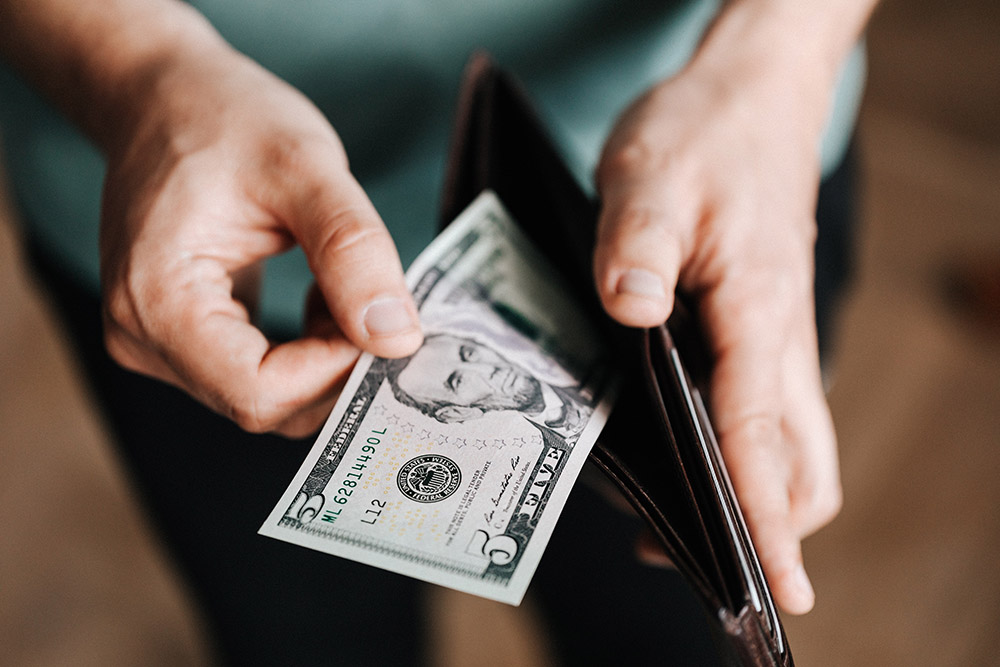
A dollar sign is one of the top things restaurants should avoid including on a menu, because it immediately reminds the customers that they’re spending money.  According to research from the Cornell University School of Hotel Administration, guests given a menu without dollar signs spent significantly more than those who received a menu with them. Even if the prices were written out with words instead of numbers, such as “ten dollars,” guests spent less money because it still triggered the negative feelings associated with paying.

2. They are tricky with their numbers

Menu designers recognize that prices that end in 9, such as $9.99, tend to signify value, but not quality. In addition, prices that end in .95 instead of .99 are more effective, because they feel “friendlier” to customers. Most restaurants just leave the price without any cents at all, because it makes their menu cleaner, simpler, and to the point.

3. They use extremely descriptive language

Research from Cornell University revealed that items described in a more beautiful way are more appealing to and popular with customers. According to further research from the University of Illinois at Urbana-Champaign, descriptive menu labels raised sales by 27%, compared to food items without descriptors.

On an NBC “Today” show interview, menu engineer Greg Rapp poses an example of Maryland Style Crab Cakes. They are described as “made by hand, with sweet jumbo crab meat, a touch of mayonnaise, our secret blend of seasonings, and golden cracker crumbs for a rich, tender crab cake.” This brings the ultimate sensory experience to the reader, and the descriptive labeling will make customers more likely to be satisfied at the end of the meal.

Interestingly, brand names in menu descriptions also help sales, which is why chain restaurants such as T.G.I. Friday’s use Jack Daniel’s sauce or Minute Maid orange juice on their menus. The more adjectives, the better.

4. They connect food to family

Customers are especially drawn to names of relatives, such as parents and grandparents, on menus. For example, people are more likely to buy Grandma’s warm, homemade cookies or Aunt Margo’s famous potato salad. It also can add a hint of nostalgia. 

5. They use ethnic food terms to make their food seem more authentic

According to Oxford experimental psychologist Charles Spence, an ethnic or geographic label, such as an Italian name, draws a person’s attention toward a certain feature in a dish and brings out certain flavors and textures. 

6. They visually highlight things

When foods are bolded, listed in a colored or fancier font, accompanied with photographs, or singled out in a box, they look far more special than the other dishes. However, high-end restaurants tend to avoid this strategy, because it can make them look tacky.

7. They use expensive items to draw you to the cheaper items

According to Rapp, restaurants use extremely expensive foods as decoys. “You probably won’t buy it, but you’ll find something a little cheaper and it’ll look more reasonable,” he says.  According to William Poundstone, author of “Priceless: The Myth of Fair Value (and How to Take Advantage of It),” in a New York Magazine interview, “The main role of that $115 platter — the only three-digit thing on the menu — is to make everything else near it look like a relative bargain.”

8. They offer foods in two portion sizes

This strategy is called bracketing. The customer has no idea how much smaller the small portion is, so they assume it’s the best value price because it costs less. What they don’t realize is that the restaurant wanted to sell the smaller portion at the lower price all along, and simply used the bigger portion with the higher price as comparison.

9. They analyze your reading patterns

Restaurants consider scan paths, which are a series of eye fixations that can be studied to see how people read certain things.  According to a Korean research study, a third of participants are likely to order the first item to which their attention is drawn. As a result, restaurants will put the most profitable items in the upper-right corner, because it is where people’s eyes go first.

This strategy is based on the primacy effect, which means people remember the items at the beginning of a list better. Another reason this works is that seeing a really expensive dish at first glance will make the rest of the menu appear reasonably priced in comparison.  Restaurants put the most focus on their main servings. According to a Cornell research study on eye movements on restaurant menus, most customers quickly scan the entire menu like a book, but focus the remainder of their attention on the entrees.

10. They limit your choices

Through features such as “try all” samplers, tapas, or fixed menus, restaurants remove the heavy responsibility people feel when choosing what to eat. It is much more effective for restaurants to limit their selection. Apparently, the optimum number of menu items is six items per category in fast-food restaurants, and seven to 10 items per category in fine dining establishments.

11. They set the mood to spend

And finally, a little reading music: According to psychology research from the University of Leicester, playing classical music in restaurants encourages diners to spend more, because it makes them feel more affluent. Meanwhile, less sophisticated pop music caused people to spend 10% less on their meals.

This post was originally written by Maggie Zhang.


Serve It Up Safe! is a ServSafe Certified food safety training provider that specializes in efficiently re-certifying Florida’s most experienced food, beverage and hospitality professionals. We award CPFM certificates that satisfy FL. Statute 509.039.

10 Tips for Safe Food

1. Buy (and use) a food thermometer

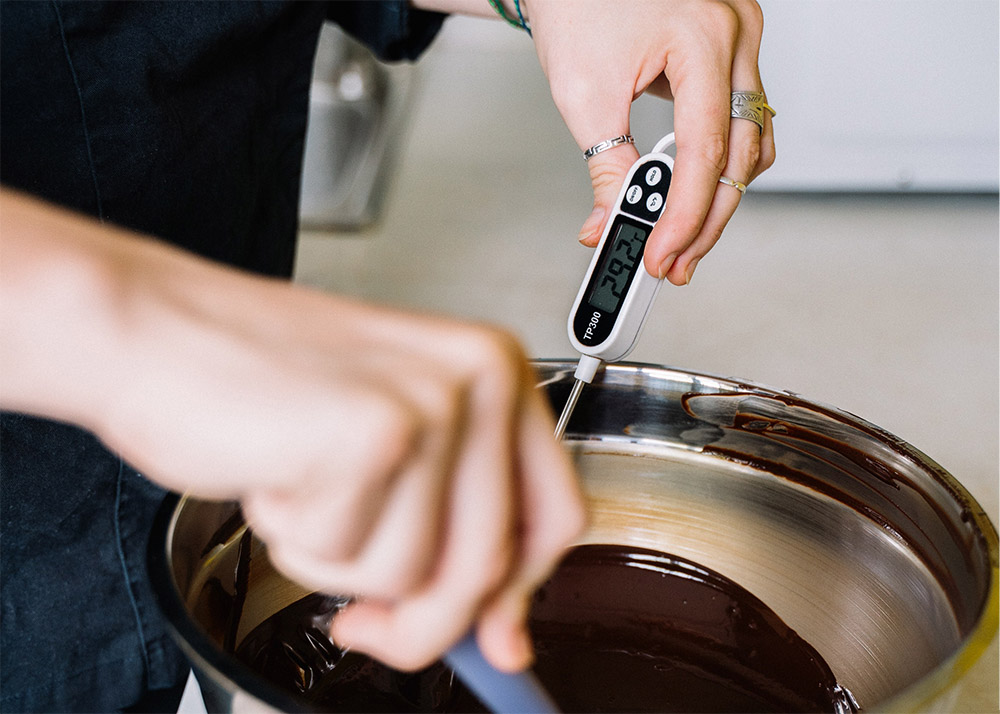
Because it is important to ensure that foodborne pathogens are destroyed during the cooking process, a food thermometer is an essential food safety tool in the kitchen. There is no other way to determine if a hamburger, roast, or piece of salmon is sufficiently heated. Buy the thermometer and follow these temperature guidelines for cooking: 

  • Cook roasts and steaks to a minimum of 145°F
  • All poultry should reach a safe minimum internal temperature of 165°F
  • Cook ground meat to at least 160°F (remember, color is not a reliable indicator of doneness)
  • Cook eggs until the yolk and white are firm, not runny and egg dishes such as quiche should be cooked to 145°F
  • Cook fish to 145°F
  • Bring sauces, soups and gravy to a boil (212 °F) when reheating
  • Reheat other leftovers to 165°F

2. Wash your hands before preparing food

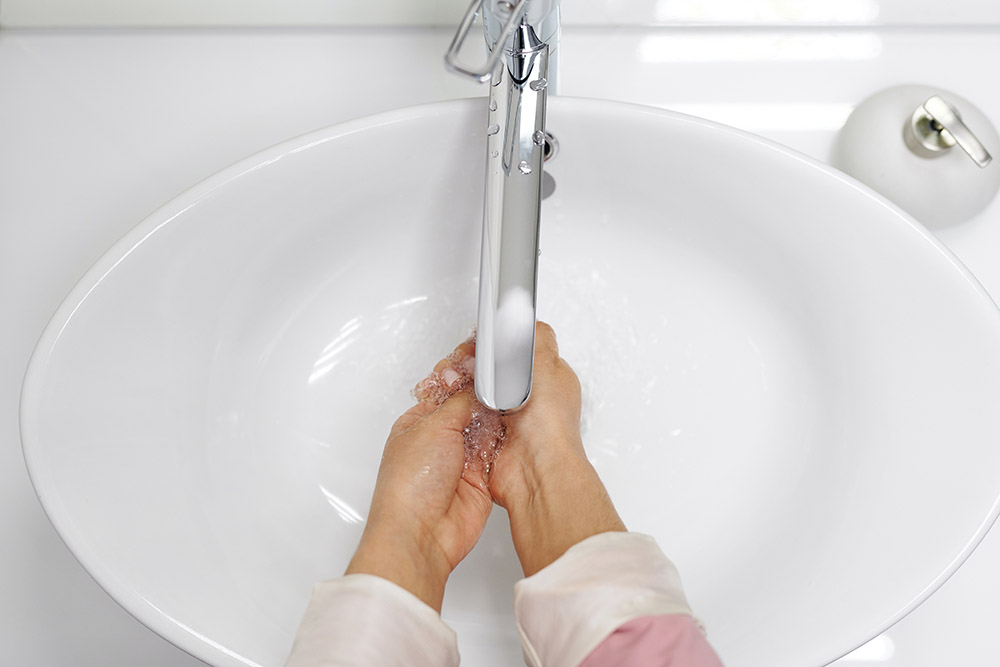
OK, this may seem like a no-brainer. Sometimes when we do something by rote, rather than thinking about it, we can get complacent. We may think a quick little rinse under some tepid, running water will do the trick. It will not. So, recommit yourself to an effective hand-washing regimen. Before you pick up that paring knife or prepare that brick of cheese for slicing, wash your hands. Scrub your hands for at least 10-20 seconds under running water WITH SOAP. The soap helps to break up the soil that hides the microorganisms on your hands. Then, the running water can do its job and flush the soil and bacteria away. Be sure to wash again after handling raw meat, poultry, fish, eggs, produce; between handling different foods; after coughing, sneezing, handling garbage; or after contaminating hands in any way.

3. Don’t cook for others when you are sick

According to the State Department of Public Health, ill food workers are often the source of foodborne illness outbreaks. In some cases, restaurants have closed due to a lack of business resulting from a well-publicized outbreak. While you may not work in foodservice, if you are preparing food for family members, friends or housemates, it makes sense to heed this advice: do not prepare food for others if you are sick—particularly with vomiting or diarrhea. Even if you are suffering from a really bad cold or flu with extensive coughing and sneezing, it may make sense to let someone else do the cooking.

4. Never buy another kitchen sponge

I will be honest. I added this to the list because I have a problem with kitchen sponges. It is probably not fair: dishcloths and paper towels are just as likely to distribute bacteria and other pathogens around the kitchen if not handled safely. A study by the Good House Keeping Institute indicated that the most effective way to clean/sanitize a kitchen sponge is to soak it for five minutes in a solution of bleach and water (3/4 cup bleach in 1 gallon of water). Less effective, but still fairly good choices are to microwave the wet sponge for 1 minute on high or to put sponges in the dishwasher. But who really does this every time a sponge gets dirty? A tall stack of dishcloths that can be thrown in the (hot water) wash is my choice. I may only use one per day, or, if I am cleaning up after cutting up raw meat or chicken, I may go through two or three in a day. I have a basket full of them.

5. Wash your fruits and veggies before eating—all of them

Simple as that… wash all fruits and vegetables just before preparing and/or eating them. Wash under running water and use a scrub brush on hard rinds: wash the rinds even if you do not eat them. Washing will not guarantee that all raw produce is germ-free, but it will reduce your risk.

6. Think twice about eating raw animal foods

Most foodborne pathogens (microorganisms that cause disease) come from the intestinal system of animals. When animals poop out the pathogens, they can contaminate soil, water, plants, and other sources of the food we eat. So, it makes sense that eating animal foods that have not been cooked sufficiently to destroy the pathogens is risky. Raw eggs (a la Rocky), raw fish (a la sushi or ceviche), raw milk or raw chicken (no one eats raw chicken, do they?) all have the potential to be contaminated with foodborne pathogens. Therefore it is best to eat them cooked or pasteurized—cooked enough to destroy the pathogens. If you are a healthy adult, you may choose to take the risk and eat raw clams, raw milk or raw beef (a la carpaccio), but children and immune compromised individuals should avoid raw animal products at all costs.

7. Buy (and use) a refrigerator thermometer

I often implore Connecticut cooks to buy a refrigerator thermometer when there is an impending storm or other event that may lead to a power outage. With a thermometer in your fridge, you are better able to determine if food is safe as the outage wears on and the temperature inside the box starts to increase. But refrigerator thermometers are important, even if the weather outside is not so frightful! It is obvious to most of us that refrigeration is essential to keep food from spoiling. But also, the cold keeps the bacteria that cause foodborne illness from multiplying. Temperatures above 40°F can support faster growth of bacteria such as Salmonella, E. coli, Campylobacter and other microorganisms that can cause foodborne illness. Putting a refrigerator thermometer in the warmest part of your fridge—and looking at it regularly—will help you to monitor the temperature to ensure that the refrigerator is doing its job.

8. Learn how to cool foods safely

Cooking to the proper temperature is one way to make foods safe. But, if there are leftovers involved, it is only part of the story. To keep food safe after cooking, it is important to chill the food quickly. Break the food down to small amounts, no more than 2-3 inches thick and refrigerate promptly. Do not keep cooked foods at room temperature for more than a few hours before refrigeration. In fact, it is best to refrigerate as soon as you are through serving and eating your meal.

9. Throw out leftovers if they are more than 4 days old

During food preparation, perishable food travels in and out of the danger zone several times: from the processor to the store, to your car, to the kitchen, to the refrigerator or freezer, to the counter for preparation, to the oven, to the table, to the refrigerator again. Each trip through the danger zone (or through several pairs of hands) can increase the number of microorganisms on the food. In addition, some pathogens, such as Listeria monocytogenes, can grow and multiply even at 40°F the refrigerator. Use your leftovers as soon as possible: take them for lunch; re-purpose them for tomorrow’s dinner; or freeze for eating later. Date them if you cannot remember when they were first served. Throw them away after four days.

10. Teach others how to handle food safely

Finally, if you are reading this article, you are getting the food safety message. Many folks simply do not know how food makes people sick. They do not understand that food can look and smell perfectly fine and still be perfectly contaminated. At your church supper, the soup kitchen, a neighborhood picnic or wherever you see or share food preparation duties, be sure to share your knowledge of how to prepare food safely so that you do not have to share a foodborne illness.


Serve It Up Safe! is a ServSafe Certified food safety training provider that specializes in efficiently re-certifying Florida’s most experienced food, beverage and hospitality professionals. We award CPFM certificates that satisfy FL. Statute 509.039.

Food Handler Training Requirement- Florida

The Food Handler Training Requirement.

It’s our job at Serve It Up Safe!  to properly train Food Safety Managers in our 5-hour ServSafe exam prep class, and we have 147 classes a year in Florida.  Then you take the ServSafe Managers exam, and when you pass, you get a Food Managers certification that is valid for 5 years.  Then it’s your job to properly train your staff, called “food handlers”.  How do you accomplish that?  To that end, there are 130 DBPR Div. of Hotels/Restaurant Approved Programs that can satisfy Fl. S~ 509.049 (the Food Handler training requirement).  125 of them are privately owned programs that are owned by, and for the exclusive use of, a particular corporate chain, like McDonalds, Burger King or Taco Bell for example.  That leaves about 5 other DBPR Approved Programs I have access to.  The materials used to train and subsequently certify 1 employee (and their certificate is then valid for 3 years) ranges in price from $6 to $20, and you have good options:

1)  Food Safety First is the program that is least expensive and easiest to use and fully complies with FL. S~ 509.049.  Let’s start with the best part- the required training guide book is FREE!  You will download and print it from our website www.serveitupsafe.com under the Food Handler Training tab (on the left).  Then you need the individual paper certificates, and every food handler needs one, and we mail them to you (USPS).  If you buy 1-49 individual certifies they are $7.00 each or if you buy 50+ they are $6.00 each. Awesome deal and very uncomplicated! DO NOT lose your training guide book; you have to have 1 on the premises at all times!

2) Food Safety Principals by the National Registry of Food Safety is a combination book & certificate all-in-one, and it is $10 per book.  This is best for smaller establishments with only a few employees.  Shipping is cheap & there are no handling costs.

3) On-line option is $9.95 each by going to www.serveitupsafe.com.  At the top of my homepage is the ‘Food Handler Certificate Online’.  It takes about an hour and is self-paced. The employee prints their certificate at the completion of the on-line training module.

4) SafeStaff  is a combination book & certificate all-in-one, and is $10 per book.  This is best for smaller establishments with only a few employees. BEWARE: they gouge on shipping & handling, and the shipping is a pass-thru cost thus the expensive part.  What is “handling” anyway?

—  ORDERING IS EASY  —

Simply reach out to us on our Contact Page and tell us your name, the business name, your full address and which program you want including your quantity!  Payment is via a check CC after they’ve shipped.  That’s uncomplicated!

Trainer Efficiency Rating

On the occasion that you have hired other training companies with the goal of getting trained, and perhaps certified, in some particular subject, like food safety for example, how efficient was your trainer? Well that all depends on how you define “efficient”. In our own internal email survey of 55 of our food, beverage and hospitality clients (albeit a rather small sample), we were able to glean enough information to unempirically determine that “efficient” in their opinion generally meant “how quickly you do a very good job of getting the job done”. The Webster’s New World Dictionary defines it similarly:

Efficient (e fish ‘ent) —adj. Producing the desired result with minimal effort, expense or waste.

Even professional athletes have a Player Efficiency Rating. In the NBA, for example, the Player Efficiency Rating (PER) is a very complicated mathematical formula conceived by Bill Hollinger that in effect boils down two things: how many good things a player does minus how many bad things a player does, and puts a numerical value on it, and then sets the standard at 15. So if a player’s PER is above 15, he’s playing good. If it is below 15, he’s not playing well. The highest PER in the league’s history is Michael Jordan at 27.91, with LeBron, Shaq, David Robinson, Wilt Chamberlin and Dwyane Wade close behind.

The same can be said of the professional training company that you use for your food safety and sanitation classes. They too should disclose their Trainer Efficiency Rating (TER). It is theoretically the same thing, only instead of using things like points scored, rebounds and turn-over’s, it uses the two most important factors in any training environment; examination passing rate and time spent in the classroom. So the higher the pass rate, the better, and the less time spent in class, the better. That outcome would constitute a much more efficient experience overall! And that’s a good thing, is it not? Here’s how it’s calculated:

The Trainer Efficiency Rating considers the trainers average pass score on a given examination as published by the company that is responsible for scoring the exams (in this case, it’s the CPFM exam from the NRFSP or ServSafe) for the previous 24 months and divides it by the average time spent in one complete specified training class (the CPFM training class and subsequent examination), and then adds a point value depending on the number of measurable and specific subject matters covered in class that are directly extracted from the 2009 Model Food Code published by the FDA (which is the prevailing guiding document when it comes to food safety and sanitation, including the examinations). Points are added as follows:

1-100           FDA Food Code subjects covered in class = +lpt.

101-400      FDA Food Code subjects covered in class = +2pts.

401-800     FDA Food Code subjects covered in class = +3pts.

800+           FDA Food Code subjects covered in class =+4pts.

The more subjects in the training class that are directly extracted from the Food Code, the better! After all, the exams come from the Food Code. The number of different and separate topics covered must all be contained within the examination publishers examination blue print and all topics must be contained within the courses curriculum (so it’s rather easy to verify).

The Trainers Efficiency Rating can then be calculated, and is reflected on a scale of 0-18, and looks like this:

TER Score:

0-5 =poor.

6-11 = average.

12-18 =excellent.

18+ =superior.

Serve It Up Safe! has a Training Efficiency Rating, and we’re proud to say that in 2012-2013, our TER was 17. It was calculated by dividing our average pass rate (92%) by our average time spent in one training session (5.5 hours) for the previous 24 months, and then adding 3 points because we cover approximately 750 different topics that are extracted from the FDA Model Food Code and included in our proprietary curriculum (lecture, videos, PowerPoint slides, YouTube video’s, written materials and props). So what’s your trainer’s TER, and does it matter?

It matters a great deal, in that it’s your time, it’s your money, and it’s your legal obligation to obtain the Certified Professional Food Manager certification to comply with Florida 509.039 (DBPR Div. of Hotels & Restaurants). And what’s the most valuable thing you have? Time! So if you could choose to spend less time in the review class but walk out with a better score, would you? At Serve It Up Safe!, we can do that, and we look forward to proving it!

10 Things Other Food Safety Trainers Wont Tell You

  1. “I charge a lot less up front because you’re not done paying me”
  2. “The examination dates I told you I have coming will probably be canceled”
  3. “The managers card you thought you wanted is actually not the better card”
  4. “I don’t stock certain exams because I can’t afford to”
  5. “When I get caught engaging in unethical and impermissible activity, every certificate ever issued under my name will be revoked, including yours”
  6. ‘The instructional materials I use in class are not mine. I infringed on another’s intellectual property and copied them”
  7. “I have to rent my equipment because I never purchased it outright, and I can’t promise you the rentals will work”
  8. “I have not been given permission to stock the exams in my in-office inventory; I have to order them in advance of each training class, and they may not show up on time”
  9. “I’ll gladly train/certify Managers but I prefer not to have to mess with your other staff”
  10. “I’m neither insured nor incorporated, so you’re the one that is exposed to my risk”

How To Prepare For Your Inspection

1. List the risk factors

  • time & temp control of PHF
  • prevention of cross-contamination
  • use of personal hygiene practices
  • proper hand-washing
  • never touching RTEwith bare hands

2. Identify the hazards

  • time & temperature abuse
  • under-cooked foods (that are PHF)
  • unsanitary conditions
  • sick workers
  • Improperly stored foods
  • chemicals in the food prep area
  • bacterial reproduction

3. Take corrective action
“conversion” – Knowledge/training translated into action, action that reduces or eliminates the hazards & risk factors!
Ex: -temp the food during cooking

  • check the ambient air temp of the fridge/freezer
  • wash your hands
  • empty the trash
  • wash, rinse & sanitize it
  • quiz staff of other food safety principals